

Publications

Why Nothing Changes: What Keeps Couples Stuck
Juan Korkie
Published 2025
Most people enter couple therapy—or pick up a book like this—wanting one thing: to be proven right, and for the other person to change. That is exactly why nothing ever does.
This book doesn’t offer quick fixes or sentimental advice. It exposes the real mechanics of how relationships break down—the hidden blueprints that shape reactions, the caricatures we create of each other, and the corrosive actions that keep us locked in survival mode.
It isn’t about communication tips or positivity. It’s about seeing what you actually do when you feel unseen, unheard, or unsafe—the habits, defences, and emotional reflexes that keep you circling the same arguments while missing the real conversation underneath.
You can’t control your partner. But you can interrupt your own patterns. And that is where change begins.
Direct and unsparing, this book challenges you to stop rationalising, stop waiting, and start dismantling the cycle that has been running your relationship into the ground. If you want comfort, look elsewhere. If you want change, start here.
“It is the pattern, not the topic, that keeps us stuck.”
Larissa Ernst, Clinical Psychologist (Belgium)
“The part of the work that is actually yours to do.”
Christi Gadd, Clinical Psychologist (South Africa & UAE)

Beyond Self-Care: The Psychological Processes That Keep Us Well
Juan Korkie
Published 2026
We know we should sleep more, exercise regularly, eat healthier food, rest, set boundaries and spend less time on our phones.
So why is wellbeing still so difficult?
Perhaps because wellbeing is not simply a collection of healthy habits.
Beyond Self-Care explores the psychological processes that help keep us well. The first part looks at individual wellbeing, from our relationship with our bodies and our own experience to the ways we belong, contribute and create. The second turns to relational wellbeing and the processes that help relationships remain healthy over time.
The two are inseparable. We do not remain well in isolation from our relationships, and healthy relationships depend on two individuals who remain connected to themselves.
This is not another book about self-improvement. It is a different way of thinking about what keeps us well.
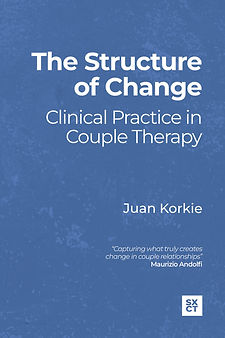
The Structure of Change: Clinical Practice in Couple Therapy
Juan Korkie
Published 2026
The Structure of Change is written for clinicians working with couples. It is organised around interaction: what partners do with each other in real time, how conversations escalate, collapse, and repeat, and how these patterns can be interrupted as they are enacted.
The approach is structured, clinician-led, and experiential. Conversation is treated as the primary site of both difficulty and change, with intervention focused directly on what happens between partners.
The work centres on identifying and disrupting patterns that maintain distress, while maintaining intensity within a range that allows both partners to remain engaged. Between-session work is treated as essential, ensuring that change extends into everyday life.
Grounded in systemic and constructivist thinking, this is a practice-driven account developed through direct clinical work with complex and entrenched relational problems.
“Capturing what truly creates change in couple relationships”
Maurizio Andolfi (Italy)
“An essential source book for the practising couple therapist!”
Frederik J. A. Snyders (South Africa)
“Captures the essence of couple therapy”
Greet Splingaer (Belgium)
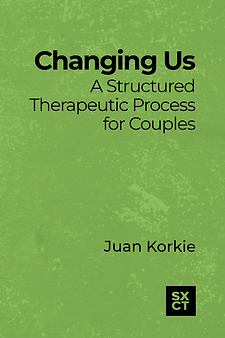
Changing Us: A Structured Therapeutic Process for Couples
Juan Korkie
Coming Soon
This is not a book you simply read. It is something you do. My previous book, Why Nothing Changes, explored why relationships get stuck. This book is about changing that. It is practical, structured, and designed to alter how your relationship actually functions in everyday life. It is written for couples to do together, not to sit side by side reading, but to actively engage in the process it lays out.
The focus here is not insight for its own sake. It is behaviour. It is about changing the structure of everyday interaction and interrupting the patterns that repeat under pressure. Relationships do not shift because we finally understand each other. They shift when both people change how they participate. This is an intensive, hands-on process that requires commitment, time, and responsibility from both partners. There are no shortcuts, no guarantees, and no quick fixes.
Some couples will use this alongside therapy. For others, provided both partners fully engage with the process, this book may be enough on its own. For some, it will not be, because deeply entrenched patterns sometimes need professional support to be interrupted. That is not failure. It is reality.
The process in this book must be followed in sequence. If you skip steps or treat it like a pick-and-mix, it is guaranteed not to work. If you are willing to follow the process in order and actually do the work together, this book gives you a concrete way forward. If not, you would be better off choosing something else with hearts and pastel colours.